Showing posts with label Tornado. Show all posts

Friday, December 25, 2015

News in Japan - December

Japan:
556 bridges found to have bad supports:The devices are supposed to keep the bridges from collapsing during major earthquakes.

USA:
Key elements of digital disaster communications demystified: Messages describing hazard impacts and emphasizing cohesion among users generated the most "retweets". Other elements encouraging retransmission include the number of users in an agency's network and the inclusion of an agreed-upon hashtag. "Shorter messages are not necessarily simpler to write," said lead author Jeannette Sutton, director of the University of Kentucky's Risk & Disaster Communication Center. "We have decades of research on longer warning messages and practically none on short messages. 
Texas tornadoes: Eleven killed in Dallas area: Eleven people have been killed in tornadoes in Texas, police say, with heavy rain and snow causing deaths and disruption in a number of other states. Further north, six people died in two incidents when cars drove into flooded roads in Missouri. Another driver was found dead in his car in a creek. Three adults and two children also drowned in southern Illinois when their vehicle was swept away.

Other:
Heavy floods in parts of South America (Dutch):Nearly 150,000 people in Paraguay, Argentina and Uruguay were forced to leave their houses due to floods. Most heavily affected was Paraguay (130,000 people), where a state of emergency has been declared and the president has already dedicated over 3 million euro as response funds. Over 125,000 people have lost power to their homes. Five people have died (4 from falling trees and one from electrocution).

According to the methods used in my latest published paper, these victims would not technically be counted as flood victims, as in that study, we excluded cases where victims died of causes unrelated to floods [such as being crushed by trees, falling from roofs, being blown off the road, or receiving electric shocks, and we found that 38% (122 victims) of the data relating to the 325 victims consisted of causes of death such as drowning (hypothermia or asphyxiation), heart attacks, or physical trauma during evacuation].
Vegetarian and 'healthy' diets are more harmful to the environment: "Eating lettuce is over three times worse in greenhouse gas emissions than eating bacon," said Paul Fischbeck, professor of social and decisions sciences and engineering and public policy. "Lots of common vegetables require more resources per calorie than you would think. Eggplant, celery and cucumbers look particularly bad when compared to pork or chicken." eating the recommended "healthier" foods -- a mix of fruits, vegetables, dairy and seafood -- increased the environmental impact in all three categories: Energy use went up by 38 percent, water use by 10 percent and GHG emissions by 6 percent.

Vulnerable People:
Child poverty could cost Japan $33 billion: The group predicted how their job prospects and lifetime earnings could change in 2 scenarios. One is that the government offers them assistance to go to high schools or colleges. The other is that the government doesn't take any action. The organization says the government's inaction would reduce the number of regular employees by 9,000 and leave 4,000 unemployed. It notes that this could result in a loss of about 24 billion dollars in their income, compared with when the government took action.


Thursday, October 8, 2015

Population preparedness in Europe

September's edition of Crisis Response featured an article on the disaster preparedness of the population in France, Belgium, UK, Portugal, the Netherlands, Greece). It proved what was generally known: people are mostly unprepared and expect the government to come save them.


Read more on how the study recommends to use social media to gather and distribute accurate disaster information at the Crisis Response journal. 

Monday, March 16, 2015

WCDRR day 3

World Conference on Disaster Risk Reduction in Sendai - day 3

In the middle of this conference I was able to visit 5 events on this day. The first was a technical session on the methods used in the Global Assessment Report 2015 at Tohoku university. The second and third took place at the International Center and covered financial aspects of disaster risk reduction. Another session there covered land use planning, while the last, at Tohoku university, was a very special session about the formation of a Delta Alliance, initiated by the Dutch government and attended by one of the Dutch princesses. 

Sunday, March 15, 2015

WCDRR day 2

World Conference on Disaster Risk Reduction in Sendai - day 2

Today I visited 4 sessions, the first three at the Sendai international conference building and the last at Tohoku University, located on a beautiful hill side, at Hagi hall (presentations will follow). The hagi tree is the symbol of the university.
My main question during the presentation of the Global Assessment Report 2015 was how the work of the GAR differs from ICHARM's goal to make a risk index. The main points include ICHARM's focus on flood hazards, end point indicators of governance and resilience of communities, and the national level and cooperation with national governments in creating and applying the index data.

Saturday, March 14, 2015

WCDRR day 1

World Conference on Disaster Risk Reduction in Sendai - day 1

Arriving in Sendai today, I only had time to visit two sessions after registration.The first session was held in the main conference building and concerned the Hyogo Framework for Action priority 2 where ICHARM member Sawano-san was a panel member; the second was a symposium held across town in the AEX tower where GRIPS students presented their finding. Below are the lessons learned from these sessions.

Thursday, August 7, 2014

Early Warning System in Chicago

Chicago has elected to apply the Modulator® II Electronic Siren Series for tornado warnings. Chicago has also chosen the most eerie of the sound options the sirens provide. This siren sounds almost as though it has already been heavily affected by the tornado and thereby strongly encourages people not to go outside but to seek shelter (as it effectively sounding as if it is the end of all times). Judge the effectiveness of this warning sound during a real tornado for yourself, or try out the various other options the Siren Series provides.

Friday, May 30, 2014

News in Japan - May

GEJET:
Nuclear regulator OKs plan to build underground ice wall at Fukushima plant

Netherlands:
Stormy weather in East Twente (Dutch)
New Dutch solution to floods

USA:
Tornadoes strike central, southern U.S., killing 9
What Happened When 549 Imaginary Storms Hit New York
Wildfires scorch San Diego County: 'Mother Nature was not on our side'

Other:
How costly are natural hazards? Experts link cost assessment with risk management
Afghan flood death toll rises as thousands need aid
Rains too much even for weather-toughened Gulf Coast
Prehistoric North Sea 'Atlantis' hit by 5m tsunami
Chance of El Niño increases during the remainder of the year, exceeding 65% during summer
Collapse of Antarctic ice sheet is underway and unstoppable but will take centuries
Water Knowledge App
Ten 'golden rules' of strategic flood management revealed by water scientists
Near-normal or below-normal 2014 Atlantic hurricane season predicted

Vulnerable People:
Mothers and children bear brunt of disasters
Why do so few young Japanese want to work overseas?
Closing Japan's gender gap could boost GDP 12.5%: report

Friday, November 29, 2013

News in Japan - November

GEJET
Regulators OKs fuel rod removal from pool at Fukushima plant
Video: This Is How Removal of Fuel Assemblies from Reactor 4 Spent Fuel Pool Is to Be Carried Out, According to TEPCO
For many Fukushima evacuees, the truth is they won't be going home

Japan
This is the year of the typhoon
http://www.japanquakemap.com/
Osaka estimates 133,000 could die if quake hits Nankai Trough the number of deaths could be reduced by 80% if evacuations begin within 10 minutes of a tsunami alert.
Japan's poor gender gap worsening, WEF survey finds
System ‘failing asylum seekers’
Long green card wait has happy ending for Japan woman and wife
1,500 disabled Japanese abused in half-year period
Thousands protest against tough new official secrets law
Japan to spend Y1 tril on public works for stimulus
Foreign trainees in Japan face exploitation

Netherlands
Tornado affected Netherlands (Dutch)
Deaths from storm in Netherlands (Dutch)
Amount of people aged 45 and up with poor literacy skills is growing (Dutch)

USA
Midwest tornadoes, winds slam towns and trucks; 5 killed in Illinois
Kids Today Run Slower Than Their Parents Did

Other
Scientists Develop New Method to Help Global Coasts Adapt to Sea-Level Rise


Monday, September 30, 2013

News in Japan - September

GEJET
TEPCO discovers pipe leaking radioactive water at Fukushima plant
The leaking pipe was found to be dripping one drop about every 90 seconds, the company said. Workers tightened 12 bolts to stop the leak and bolstered the repair using special material and plastic tape.

Japan

Netherlands


USA

Other


Wednesday, September 4, 2013

More tornadoes in Tochigi prefecture

As tropical storm Toraji is hitting western Japan, today more tornadoes occurred in Tochigi prefecture: Kanuma, Shioya, and Yaita town were affected.

Embedded image permalink


Images. Fuji News Network has a video. No casualties have been reported so far, but 600 houses have no power.

The Japanese word for tornado is 竜巻 (tatsumaki). While there is no English page on the JMA concerning tornadoes, there are records of them across country since 1961. Anything higher than what is now classified as F1 is still rare. Here are some figures from Ibaraki prefecture. Looks like JMA will have no trouble acquiring funding for the new radar development.

Tuesday, September 3, 2013

Tornadoes in Noda (Chiba prefecture) and Koshigaya (Saitama prefecture)

Noda (30 km from Tsukuba) and Koshigaya (40 km from Tsukuba) experienced tornadoes on September 2nd. Unlike the Hojo tornado in May 2012, which even prompted the JMA to request funding for a new radar tracking clouds every 10 seconds, nobody died.

Previously we had visited the monument of the Dutch civil engineer Rouwenhorst Mulder near the canal he built, close to Noda city. The images now give a different impression. As of now, in both areas combined 67 people are injured and 550 buildings damaged. Some buildings still risk collapsing and 5 shelters are operating.

From the NHK:


Low storm cloud caused tornado
A meteorologist says a tornado that hit parts of eastern Japan on Monday was produced by a supercell -- a thunderstorm containing rotating updrafts of air -- that formed much closer to the ground than usual.

Japan's National Defense Academy Professor Fumiaki Kobayashi said he studied footage of the tornado captured in the Saitama and Chiba prefectures.

The professor said the cloud developed as low as 500 meters from the ground. Such clouds usually form at twice that height.

He said a funnel-shaped airstream appeared under the cloud and grew to at least 100 meters wide.
Kobayashi said the cloud was so large that it maintained power even when the storm lost energy due to rainfall.

He said people in the tornado-hit areas must have thought they could touch the dark cloud. He urged people to be cautious of supercell clouds as they can be a sign that a tornado is coming.


Update: 64 people injured, over 600 houses damaged. More news and videos here


At the end of this video there is a commentary by Dr. Takeshi Maesaka, senior researcher of the storm, flood and landslide research unit, monitoring and forecast research department of the NIED in Tsukuba. He gave us a lecture and visit to the radar analysis room at a field trip October 30th, 2012


Tuesday, May 8, 2012

Hojo Town Tornado Aftermath

Colleagues have taken pictures of the aftermath of the tornado in Hojo Town, at the North of Tsukuba municipality. The destruction is enormous. Below are images showing where Hojo town is in Japan, and a view of the tornado path. It still is hard to believe this is the same place we visited just three weeks back. Many former possessions are already stacked away as trash, and people are fixing their roofs. The Self Defense Force was also assessing damage. Even stone statues of the temples are broken and concrete power lines pushed into the ground.


Tsukuba City Homepage now also had information available in English:


There was a Tornado in Tsukuba City on May 6th (12:45pm)(Updated May 7,2012)
  • Evacuation Places
    1) Oda elementary school
    2) Tai elementary school
  • Where to dispose waste,rubbles, garbage, etc.
    1) Tsukuba community center (South parking area)
    ■8:30am - 17:15pm (every day for the time being)
    • wood/timber, heat insulating material, concrete walls, roof tiles are acceptable.
    2) Clean center
    ■weekdays 8:30am - 16:30pm, Sat 8:30am - 11:30am
    • burnable garbage, non-burnable garbage, home electric appliances are acceptable.
※Please bring the garbage directly to the Clean Center (Tsukuba Mimori 2339, Tel:029-867-1379)
  • Traffic Information
    Bus stops have changed around the Hojo area and around the Tsukuba community center.

The Japanese version of the website shows much more detailed information, including the following table (translated by Google Translate):

Human suffering (human)   Dwelling damage (buildings)
Dead
Missing person
Injured
Hojo district
Daisuna district Nishigoya district 
Yoshinuma district
Serious injuryMinor injury
 One
Zero Zero 37
170 destroyed, 207 partially destroyed, 450 damaged part, a total of 827
(Some of them are also included non-residential buildings such as warehouses, barns)

Almost immediately after the event the emergency volunteer website started to organize volunteer activities (translated by Google Translate):
We will begin registering volunteers to affected areas at this time a tornado occurred in Tsukuba City on May 6. Future, you will be asked to go to activity according to the needs of subscribers from the victims. Asked to perform activities according to your needs, so you may not be able to ask their activities are registered, please understand. Contact Volunteer Center disaster ◆ Tsukuba   Address: (place of study painting two school district town D32) 2530-2 Karima Tsukuba       , Tsukuba City Hall second floor   Phone :029 -883 -1370 ※ Registration time volunteers, 9:00 to 17:00 will be.  Addition, if you know of anyone who made ​​the request of the volunteer activities in Shakyo, we will join the (plan A natural disaster) insurance Shakyo volunteer activities at their own expense.  In addition, households are limited to local areas and, unlike when the earthquake affected areas, many are not coming up still needs volunteers. In addition, the site is located at inconvenient traffic, crowded with a vehicle such as debris removal and restoration work, and had been suffering from traffic congestion. Volunteer coordination, so you will be a request from more activity in accordance with the circumstances and needs of victims of the disaster area, familiar with regional conditions, please register it understands.

The JMA is being cautious and have issued a warning, according to the mainichiThe weather agency cautioned that similar atmospheric conditions that gave rise to the tornados on Sunday could develop over a wide area between Thursday through Friday. 
Let's take care riding our bicycles to work.

More scientific information can be found here.

Sunday, May 6, 2012

Trip to Kokai and Kinu river

We are safe!

Today we returned from a trip to the Kokai and Kinu river. The news when we returned was that Tsukuba had been struck by a tornado. It actually struck the Hojo area North of Tsukuba, where we visited with professor Takeuchi earlier last month. It also caused a power outage, but we have full power here, so it's almost as if nothing happened. The Tsukuba city website is displaying which bus to take to evacuation centers in case you were living in the Hojo area. Over 400 houses are destroyed and 30 people are injured, some severely, and one boy has died. Tornadoes are rare, it is said.

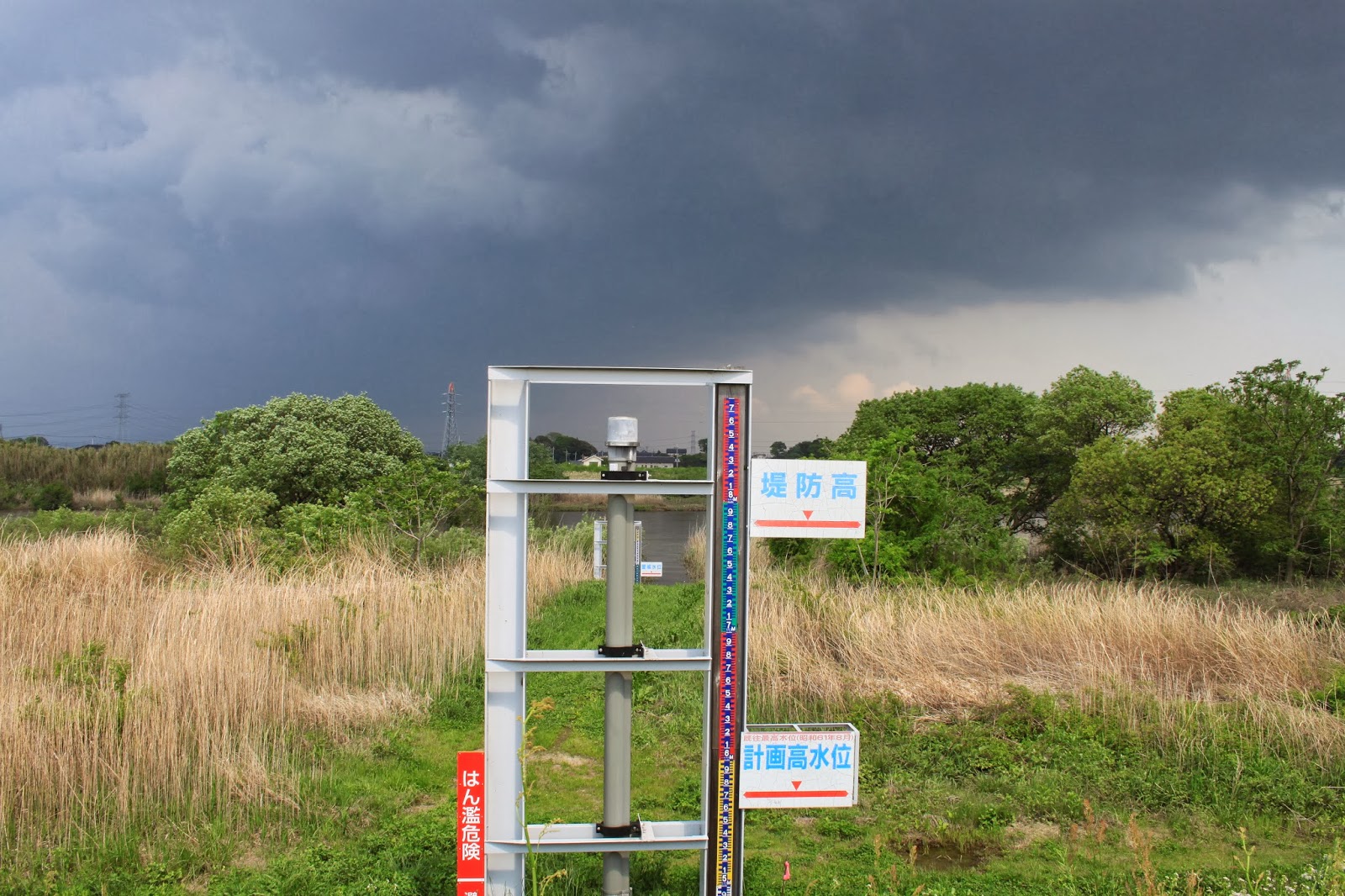
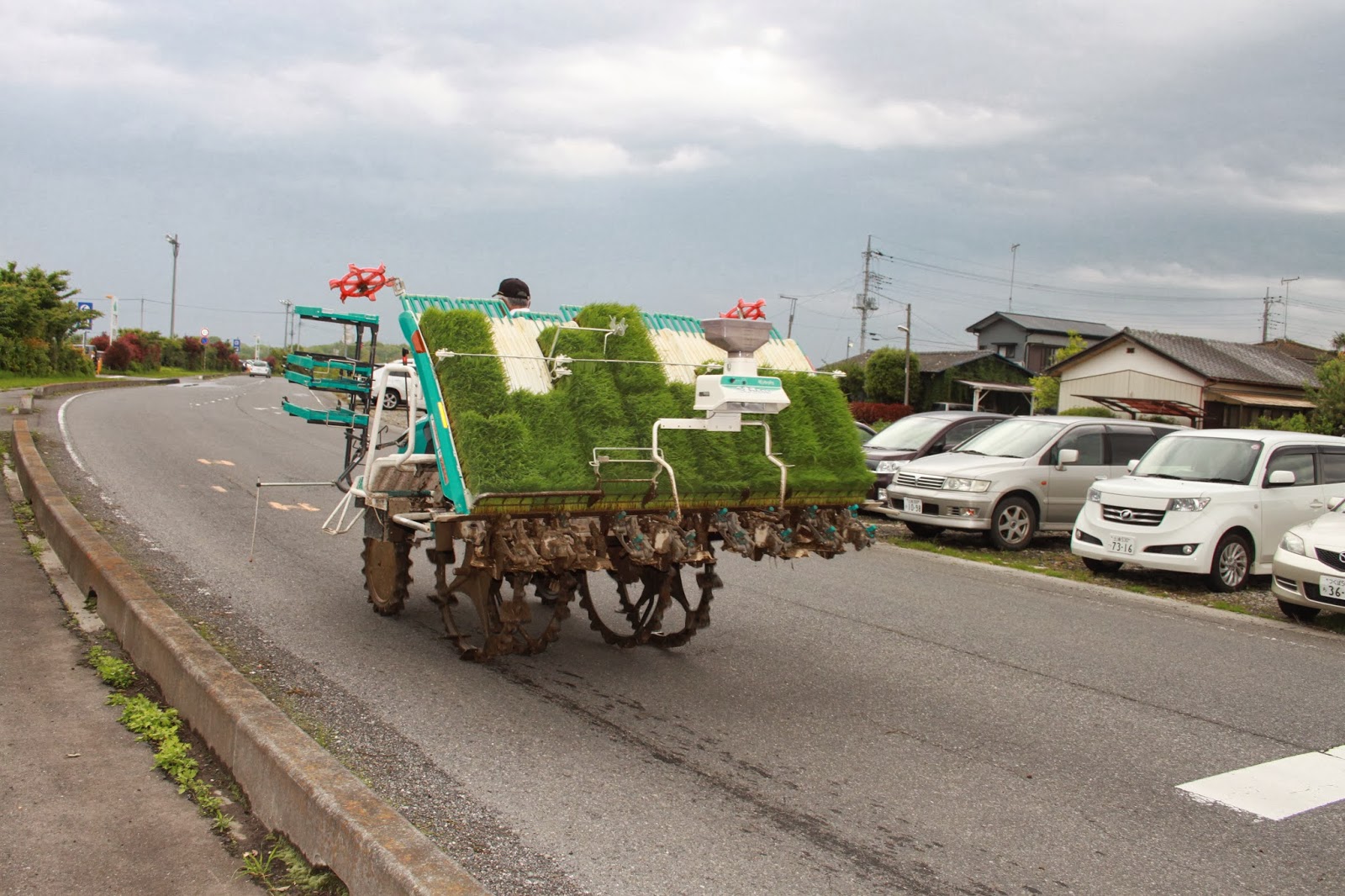
The pictures we took today show stormy skies. Having a holiday, many people were out on the river with jet skis or fishing equipment. At the Fukuoka weir, we nearly were blown off the weir into the water. This was about the time the tornado struck. We stopped at several water in- and outlets going North along the Kokai river. We ended up at the butterfly shaped insect museum, which also features fish and a gallery with pictures and images made from flower petals. At the Aeon shopping mall we saw an agricultural rice planting machine. The next day I heard there was a tornado in Tsuchiura last year, just 10 km South of Tsukuba. It doesn't sound quite so rare.


Tuesday, September 14, 2010

Heavy rain in Japan

NHK reports heavy rain in the Kanto and Touhuko regions of Honshu, Japan (North and North-East, see image below). One particular area received 5.8 cm of rain in 1.40 hours. Aside from floods and landslides,the Japan Meteorological Agency also warns for tornadoes, lightning and wind gusts.